


True deck soap is based on linseed oil
Anything else is a compromise
The difference lies in the ingredients
What determines how well a deck soap performs is not only how clean it gets the surface - but what it adds and leaves behind in the wood.
Base oil, soap content and protective properties are crucial for both the result and long-term durability.
Here we compare the properties that actually make a difference in practice, across some of the most common deck soaps on the Swedish market.
The comparison is based on each product’s stated ingredients and characteristics as of March 2026.
A proven method for Nordic climates
Outdoor decks face constant exposure to rain, frost, sun and dirt. Over time, the surface dries out and loses its natural balance.
With traditional linseed oil deck soap, you work with the wood rather than against it. It cleans gently while nourishing the surface, helping the deck age evenly and stay easier to maintain year after year.
Guides and wood care knowledge

How to scrub your deck – step by step
The complete guide to cleaning, mixing and using the right technique. Gentle on the wood, clearly explained and easy to follow.

Why deck soap works
Learn how the wood grain responds to soap, why overfatted soap makes a difference, and how the method creates a more even result over time.

Soap vs oil – which is better?
A clear comparison that addresses common misconceptions, advantages and drawbacks, and what works best for pressure-treated decking.
KLARA Life AB
KLARA Deck Soap – Complete Kit 3L
In stock - Ready to be shipped
A carefully composed kit for those who want to clean their deck properly, with the right tools from the start. Everything you need for efficient, gentle and even deck soaping – whether for a patio, dock or outdoor space.
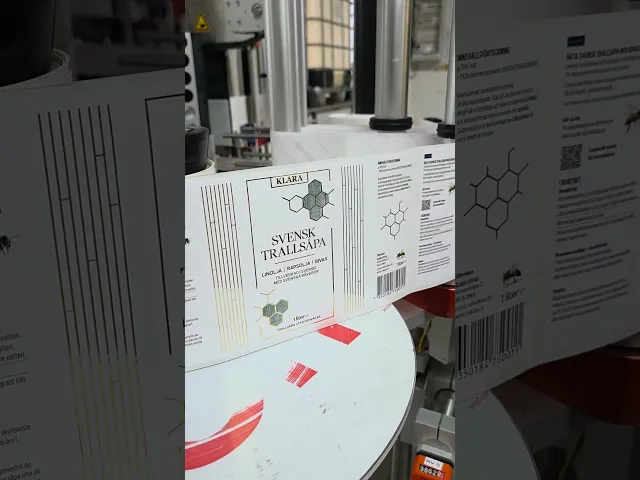
The kit includes 3 liters of deck soap based on linseed oil and beeswax, formulated to clean while caring for the wood. The linseed oil works within the surface and helps prevent drying, while the beeswax contributes to a more cohesive and durable finish over time. The soap is suitable for both deep cleaning and main treatment.
The 300 mm stiff wide deck brush is the most versatile brush in the range and is used on larger surfaces where you want to work efficiently with consistent pressure. The stiff detail brush is used around edges, corners, posts and other details.
During the main treatment, the soap is applied using the scrubbing cloth, placed over the brush. This allows the solution to be distributed evenly while the brush provides control and flexibility. The method lets the soap work into the wood without raising the grain, resulting in a calmer and more even finish when the soap is left to dry in.
All mixing is done in the sturdy bucket, designed specifically for use with deck soap and wide brushes.
Together, the kit creates a method that works with the wood rather than against it. The result is a clean deck, more even aging and a surface that stays attractive longer – with less wear over time.
A complete kit for those who want to do the job properly, without shortcuts.
Frequently Asked Questions
Yes — there are different kinds, and they vary in both content and how they affect the wood over time. Linseed-oil-based soap is generally considered the best option because it both cleans gently and reconditions the wood deeply. The differences usually become noticeable after several treatments, not just one single wash.
If you want to read more, you can read our reasoning in the article Best in Test Deck Soap .
Soaping a deck is simple - but done correctly, it both cleans and protects the wood in one process.
1. Prepare the deck
Sweep away leaves, dirt and loose debris. If the deck is very dirty, start with a light cleaning.
2. Mix correctly
Cleaning: approx. 1:50-1:100 with warm water
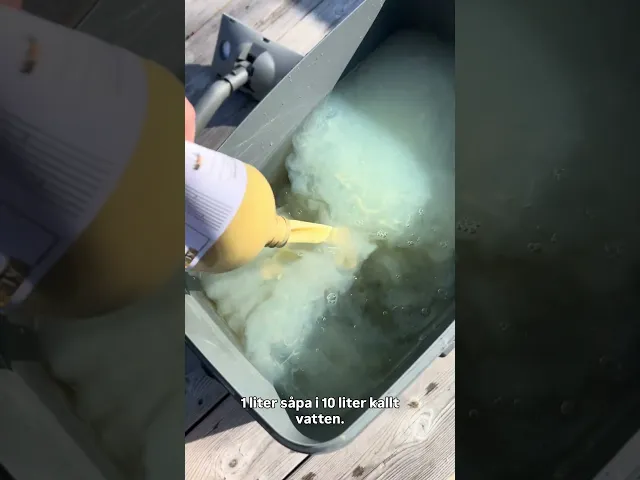
After-treatment: approx. 1:10 with cold water
The stronger mixture is used to replenish and protect the wood.
3. Work in smaller sections
Divide the deck into sections of about 2-3 m². This allows you to work the soap in properly without it drying.
4. Scrub in the soap
Apply generously and scrub along the grain of the wood.
5. Rinse thoroughly
Rinse with water until the surface is clean. Do not let soap residue dry unevenly.
6. Let it dry
Allow the deck to dry. A thin protective layer remains and helps protect the wood over time.
Deck soap is mixed differently depending on whether you are cleaning or treating the wood:
For cleaning:
Mix approx. 1:50-1:100 (e.g. 1 dl per 10 liters of water).
Use warm water. For heavily soiled decks, a stronger mix (1:50) can be used.
For after-treatment:
Mix approx. 1:10 (e.g. 1 liter per 10 liters of water).
Use cold water. This richer mixture replenishes the wood and leaves a protective layer.
Deck care is less sensitive than many people think. The most important thing is not the exact temperature, but how you work.
You can soap your deck early in spring, as soon as the snow is gone and the wood has had a few days to dry. Even temperatures around 5°C work well.
What matters more is the sun. In strong sunlight, the soap dries quickly, and when you scrub, dirt can start to settle back into the surface if you work on areas that are too large.
Work in smaller sections instead. If there are two of you, the job becomes even easier - one person scrubs while the other rinses immediately with a garden hose. This prevents the dirt from drying back into the wood and makes the work flow much better.
It is also worth remembering that the scrubbing is the main job in sunny weather. The after-treatment is calmer and is best done when the sun has moved away. This gives the wood more time to absorb the soap and helps create a more even result.
An overcast day or working in the shade is often ideal. Spring sunshine usually works well, as it is rarely strong enough to interfere with the process.
Now you are ready to start scrubbing.
Yes - it works.
Deck soap cleans effectively even on a previously oiled deck. It removes dirt, pollen and organic growth without being harsh on the wood, making it a gentle alternative compared with many other methods.
At the same time, the soap gradually breaks down the old oil treatment. With repeated soaping, the oil will slowly disappear and be replaced by the smooth, natural surface that the soap builds up.
Many people therefore use deck soap specifically to move from an oiled deck to a soaped surface, where the wood is instead re-fattened, ages more evenly over time and attracts less dirt than an oiled surface - making it easier to maintain year after year.
Summary: yes, it works very well.
Linseed-oil-based deck soap has long been used to care for wood due to its ability to recondition the surface. Unlike strong cleaners, an overfatted linseed oil soap cleans without stripping or drying out the wood grain.
The deck can feel slick when wet — just like any wood surface in the rain. Once dry, a properly treated deck usually has a pleasant feel underfoot. Avoid letting the soapy solution dry in direct sun; rinse thoroughly after cleaning.
t’s better not to. Pressure washers can lift the wood grain and make the surface more susceptible to dirt. Using an overfatted deck soap with a brush cleans effectively without damaging the wood, and the results last longer.
It depends on the level of dirt and how generously you apply it, but as a rule of thumb, one liter of deck soap often covers about 20–30 m² during a treatment. A very dirty or dry deck may absorb more.
Deck soap has a mild, clean scent that tends to be perceived as fresh rather than perfumed. The smell is usually strongest while you’re working, then fades quickly as the wood dries and outdoor air disperses it.
Deck soap is specially formulated for outdoor wood and is often overfatted so that it both cleans and conditions the surface. An overfatted soap leaves behind a nourishing layer that makes the surface easier to maintain over time, especially on wood exposed to weather and wear.
Deck soap lifts dirt, conditions the grain and helps the wood maintain a consistent appearance with regular use. For detailed answers about coverage, scent and slip risk, we’ve gathered practical insights in our dedicated FAQ section here: Practical questions about deck soap
For most patios, deck maintenance is much easier and faster than you might think. We've broken down the time required step by step, from preparation to finished surface, here: How long does it take to soap a deck?
Yes, the same method often works equally well on multiple wooden surfaces outdoors. We go over how to use deck soap on railings, stairs and outdoor furniture here: Can you soap patio railings, stairs and outdoor furniture?
At the moment, KLARA Deck Soap is sold only directly from us through trallsapa.se, so we do not have any retailers or physical stores yet.
But you do not have to wait to take care of your deck just because you do not have deck soap at home.
Scrub the deck clean with what you have, rinse thoroughly and let the wood dry. When you receive our deck soap, you can then after-treat the wood and re-fatten the surface with linseed oil and beeswax.
The most important thing is that the deck is properly cleaned first - the caring treatment can absolutely be done a few days later.
A little bit of cheating, perhaps - but it still works well.
A little rain is normally not a disaster.
When you after-treat with deck soap, the surface usually only needs a few hours without heavy rain for the soap to start working into the wood.
If there is a light shower, it is usually not a problem.
However, if heavy rain comes immediately after application, some of the soap may be rinsed away before the wood has had time to absorb the treatment properly. In that case, you can simply add a light after-treatment later.
We actually only know of one slightly unusual case where rain left visible marks. A very short shower with unusually large and heavy drops came just after treatment, while the deck was extremely dry. In some areas, the drops knocked the soap away before the wood had time to absorb it, and once everything had dried, faint rings from the water drops could be seen.
However, that was a very unusual combination of weather and wood conditions.
In short - a few raindrops are rarely something to worry about.
We actually recommend a stiff brush for almost everyone.
A stiff brush works down properly into the structure of the wood and lifts pollen, dirt, organic growth and old material that often remains in the surface, even when the deck may look fairly clean.
This is especially true for normal decking that is exposed to the weather all year round and collects pollen, rain and dirt throughout the season.
The soft brush is mainly suitable for decks that have already been soaped for several years and have developed a very fine, even and almost velvety surface. One of the great things about soap treatment is that the wood gradually builds up a surface that becomes easier and easier to maintain each year.
At that stage, a gentler clean is sometimes enough for maintenance.
On a normal deck, however, we think the soft brush is often a little too gentle and does not really clean deeply enough.
In short:
stiff brush - our first choice for almost all cleaning
soft brush - mainly for very well-maintained decks with a fine soaped surface